







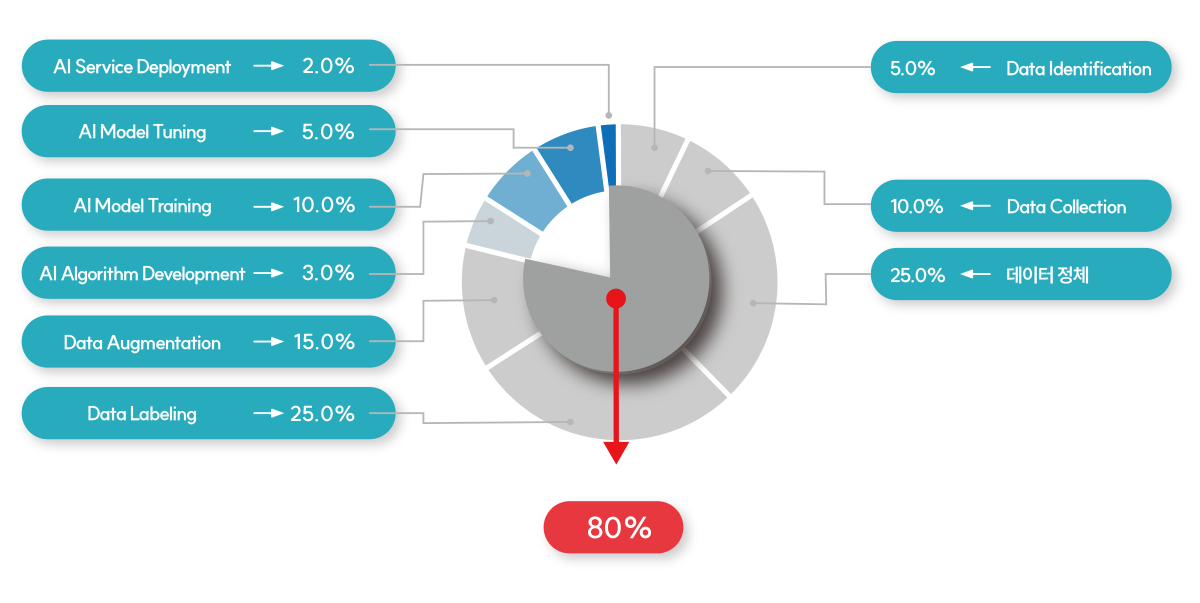
No matter how advanced an AI algorithm is, an AI service can become ineffective if low-quality training data is used.
AI TECHNOLOGY|AI Technology
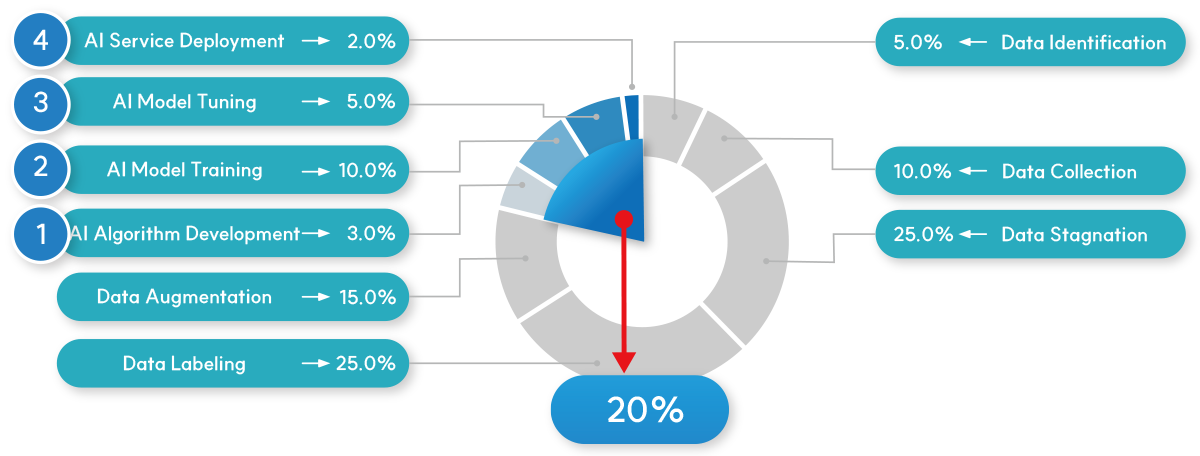
AI Service: "20%" Technology
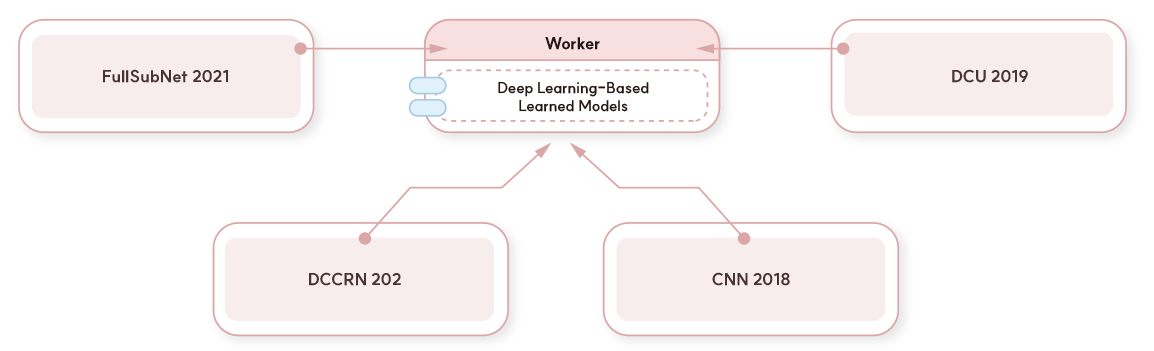
AI Algorithm Development
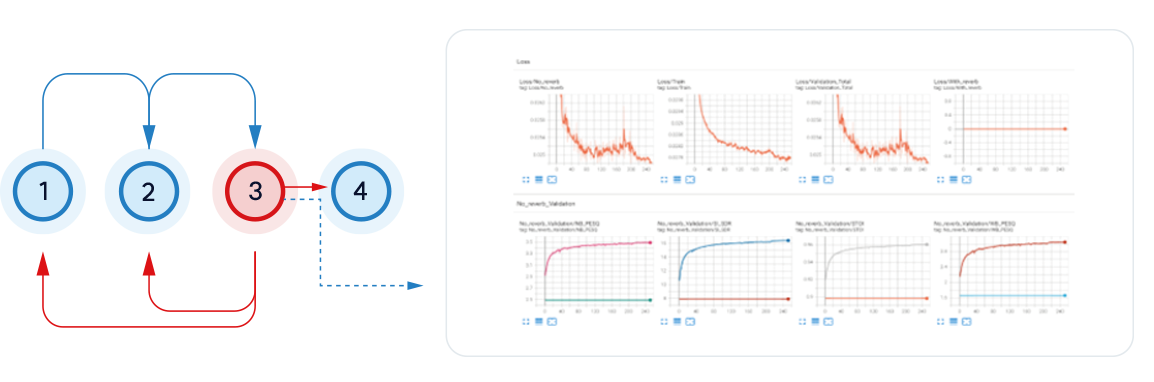
Define the service development scope → Study the latest papers (SOTA, etc.) and open-source trend technologies → Modify input/output layers → Train with a minimal dataset → Validation. AI model development is mostly limited to partial modifications.
AI Model Training
Train selected target models with small datasets → Validation. Then train with large datasets → Validation → Inference.
AI Model Tuning
Merge two models, partially modify models (hidden layer changes, loss function changes, LR scheduler additions, GPU acceleration/multi-GPU usage, etc.), and tune hyperparameters.
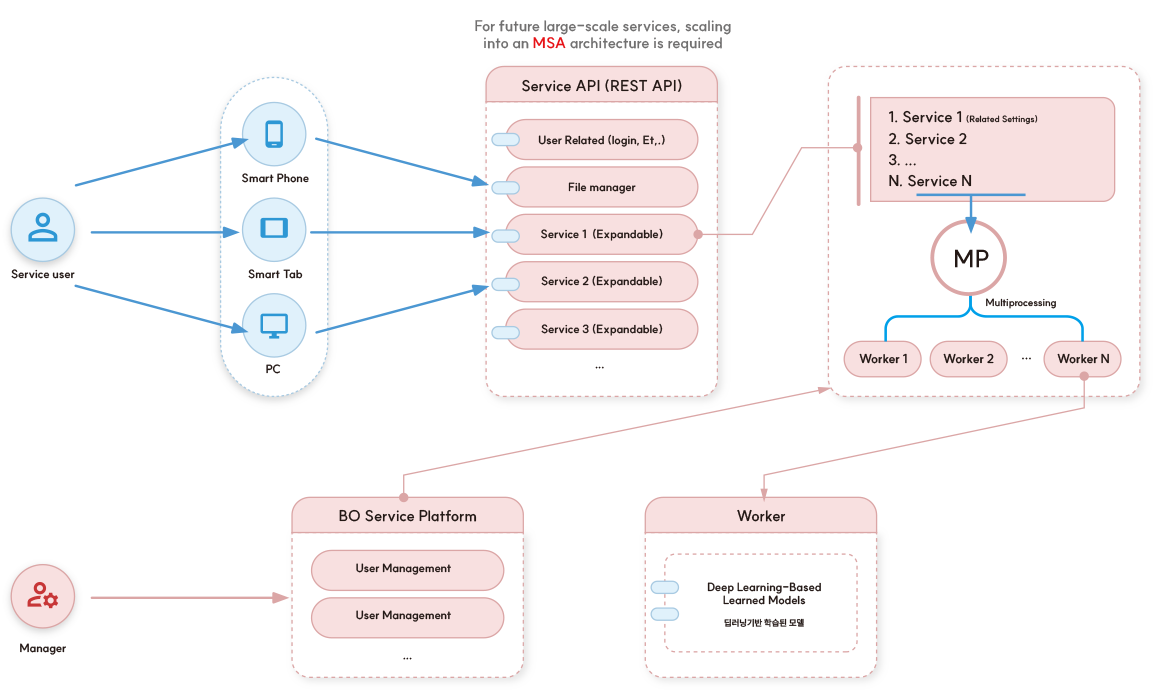
AI Service Deployment
Build REST API-based service backends.
DEEP LEARNING|Deep Learning
Development of a Deep Learning-Based
BGM Denoise Filtering Solution (SKT)
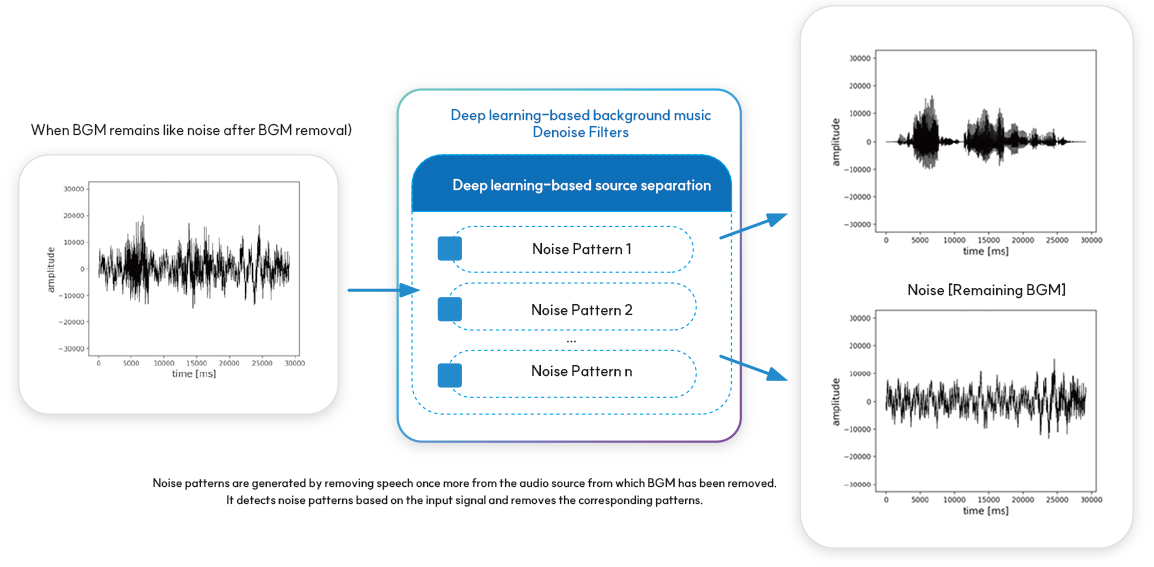
After removing BGM (background music), we built a comprehensive audio processing system to improve voice quality and enable clearer speech recognition through the analysis, design, and development of a Noise Detection & Reduction Post-Processing Solution. This solution uses deep learning-based advanced audio signal processing technology to effectively remove background music and various types of noise, while developing post-processing algorithms that maximize speech clarity. Developed in collaboration with SKT, it is a practical solution for addressing a wide range of audio quality issues that occur in real broadcast environments,
contributing to improved speech recognition accuracy and a better user experience. It also provides a scalable system that can efficiently handle large volumes of audio data through optimized algorithms capable of real-time processing.
ANNOTATION TOOL|Annotation Tool
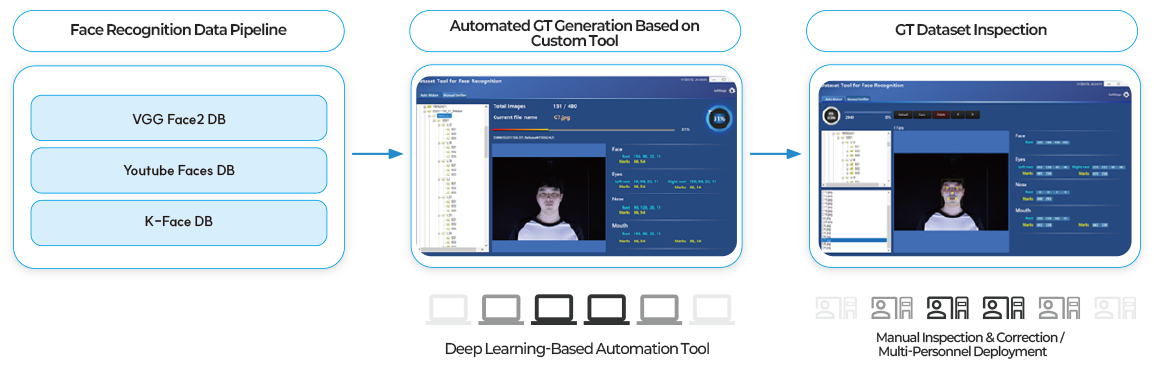
DATASET Annotation Tool
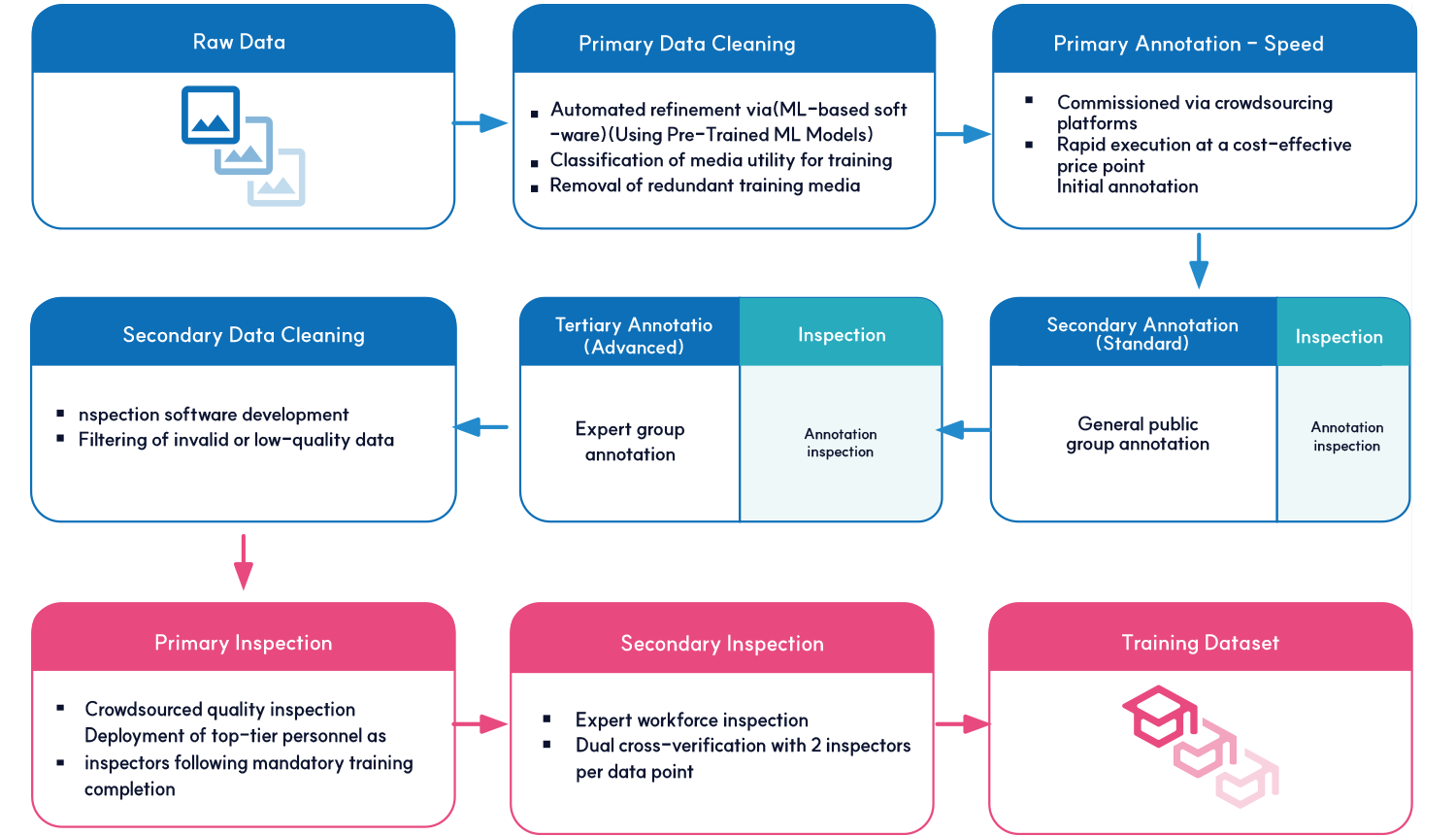
This tool supports data labeling, processing, and classification across various fields to generate large-scale training and test data. It provides a professional annotation tool for systematically building high-quality datasets required in diverse AI fields, including computer vision, natural language processing, speech recognition, and recommendation systems. Through a multi-user collaboration environment, real-time quality control, and an automated validation system, it ensures both efficiency and accuracy for large-scale data projects.
REAL-TIME SW|Real-Time Software
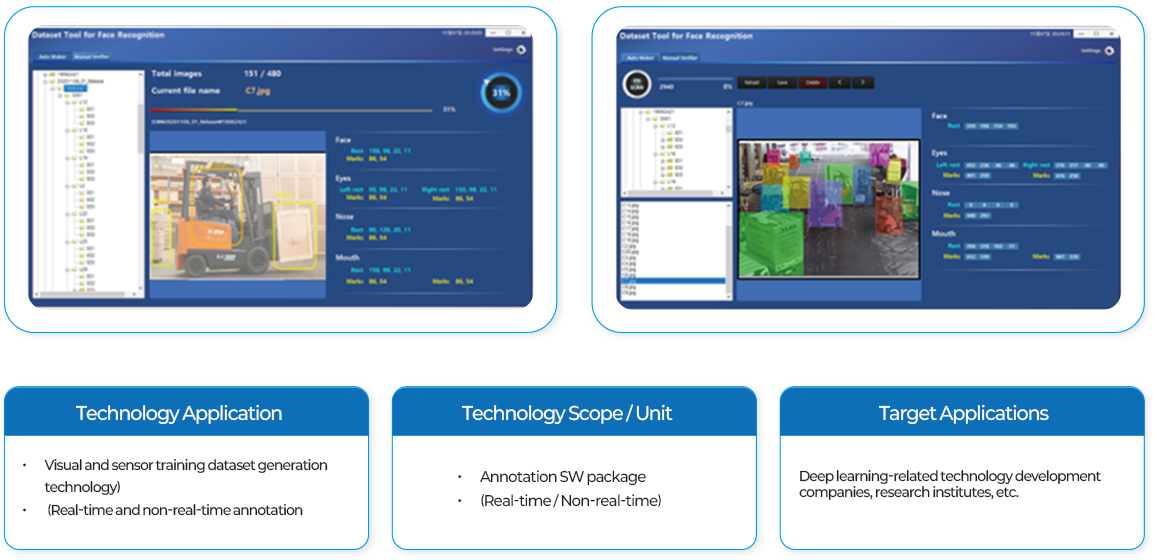
Real-Time Deep Learning Training Data Software
This software builds large-scale datasets from vision and sensor data. In addition to data labeling and processing, it supports conversion into various formats required for AIoT training, such as MS COCO and YOLO. It provides real-time data collection and preprocessing capabilities to generate high-quality training data for a wide range of AIoT fields, including computer vision, autonomous driving, and robotics. By supporting a complete data pipeline, including multi-sensor data integration, automated labeling, quality validation, and version control, it maximizes the efficiency of AI model development.
CROWDSOURCING|Crowdsourcing
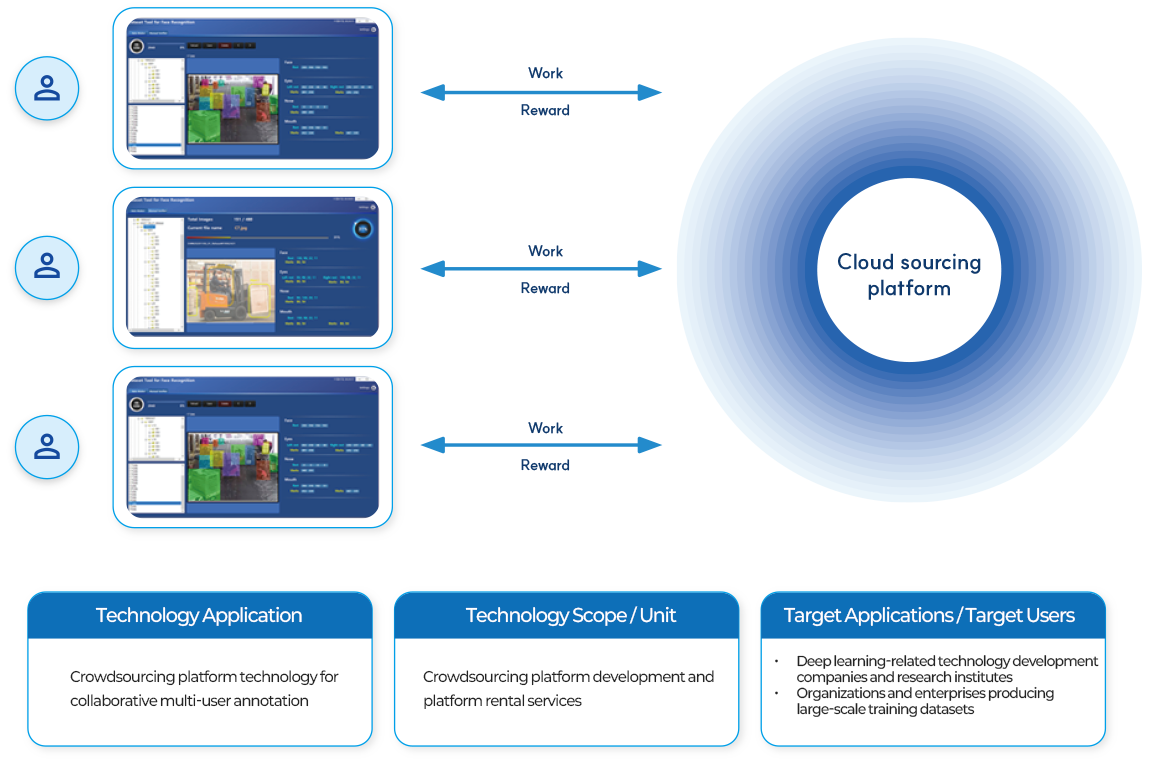
Training Data Crowdsourcing Platform
Large volumes of data can be processed through a crowdsourcing platform that collects, processes, and classifies training data online. By enabling experts from around the world to participate, the platform builds a distributed data ecosystem that can produce high-quality training data at scale and secure the vast amount of data required for AI model development. Users can generate revenue by processing data from various fields through dedicated tools, while companies can build large-scale datasets cost-effectively and improve the success rate of AI projects.